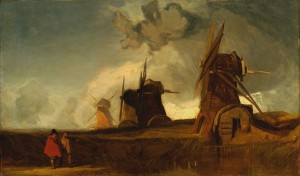
Fenland’s Wind Engines
The wind engine was the earliest form or drainage machine. It looked almost identical to a windmill but had water scoops instead of stones for

The wind engine was the earliest form or drainage machine. It looked almost identical to a windmill but had water scoops instead of stones for
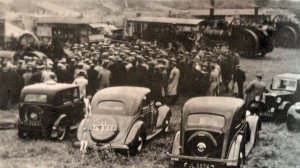
Buyers came from miles around for what is believed to be the dispersal sale of Ernest Harwood’s steam engines and other equipment in the early

Lincolnshire Bonnets were a very common feature in 1890’s. Ladies wore these bonnets in the fields, They were hand made using white material, heavily starched
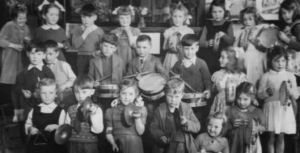
A group photo of the Sutton Bridge Primary School class in 1948. The children are holding instruments which suggests the photo was taken during a music

A farming photo showing Richardson Brothers & workers at Surfleet Road, Pinchbeck. Undated Click on image to enlarge

Gosberton once had three working mills. The mill which gave its name to Hill Lane was a Post Mill and this was demolished in 1898.

The following is an extract from the leaflet available at the church and some additional pictures. North Porch, most probably an addition in the 16th
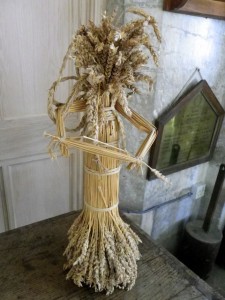
The following article is about the history of the Corn Dolly. Do we known of an expert on Lincolnshire Corn Dollies? It would be good
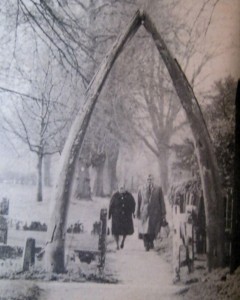
A photo of the Whalebone Arch, at the entrance to Cinder Ash Park, Long Sutton. It was presented to the village by a Miss Copeman

In this photo we see some sugarbeet being topped and loaded into carts at Mr Smiths Farm, Monks House, Spalding. Dated as early 1900’s. Click
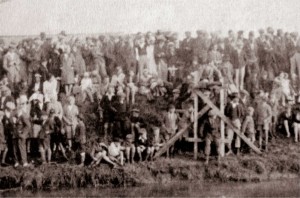
Pinchbeck used to have its own annual water sports event each year. The event took place in the River Glen, near Richardsons Farm, Glenside South.
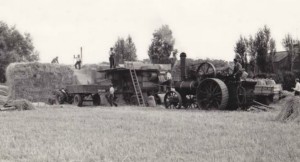
This photo shows the last steam threshing to take place in Lincolnshire. This was at Dents Farm, Fold Lane, Moulton in the early 1960’s. Click

We had a gentlemen come into the Forge on Wednesday with some lovely 1932 maps but also asking about Teapot Hall. I contacted Mr Bateman

Holme Fen, specifically Holme Posts, is believed to be the lowest land point in Great Britain at 2.75 metres (9.0 ft) below sea level. Before

A photo of some Irish potato pickers at J.Richardsons Farm, Twenty 1973 Click on image to enlarge

This photo shows peas for harvest put on poles for drying in the field on J.Richardsons Farm, Twenty. Dated 1976 Click on image to enlarge
A photo of some early cars parked on the roadside at Gedney Dawsmere. The first car is owned by Mr A. E. Holbourn of Gedney

This photo shows a Mr Bill Drury of Caulton Farm, Postland, Crowland with his percheron and wagon outside Miss Halfords private school which was on

This postcard shows a view of the river through Deeping St James, with Manor House to the left. Manor House is a large stone building.

This photo shows a group of potato pickers somewhere in or around Crowland. Dated 1880’s Does anyone know which farm this was on ? Click