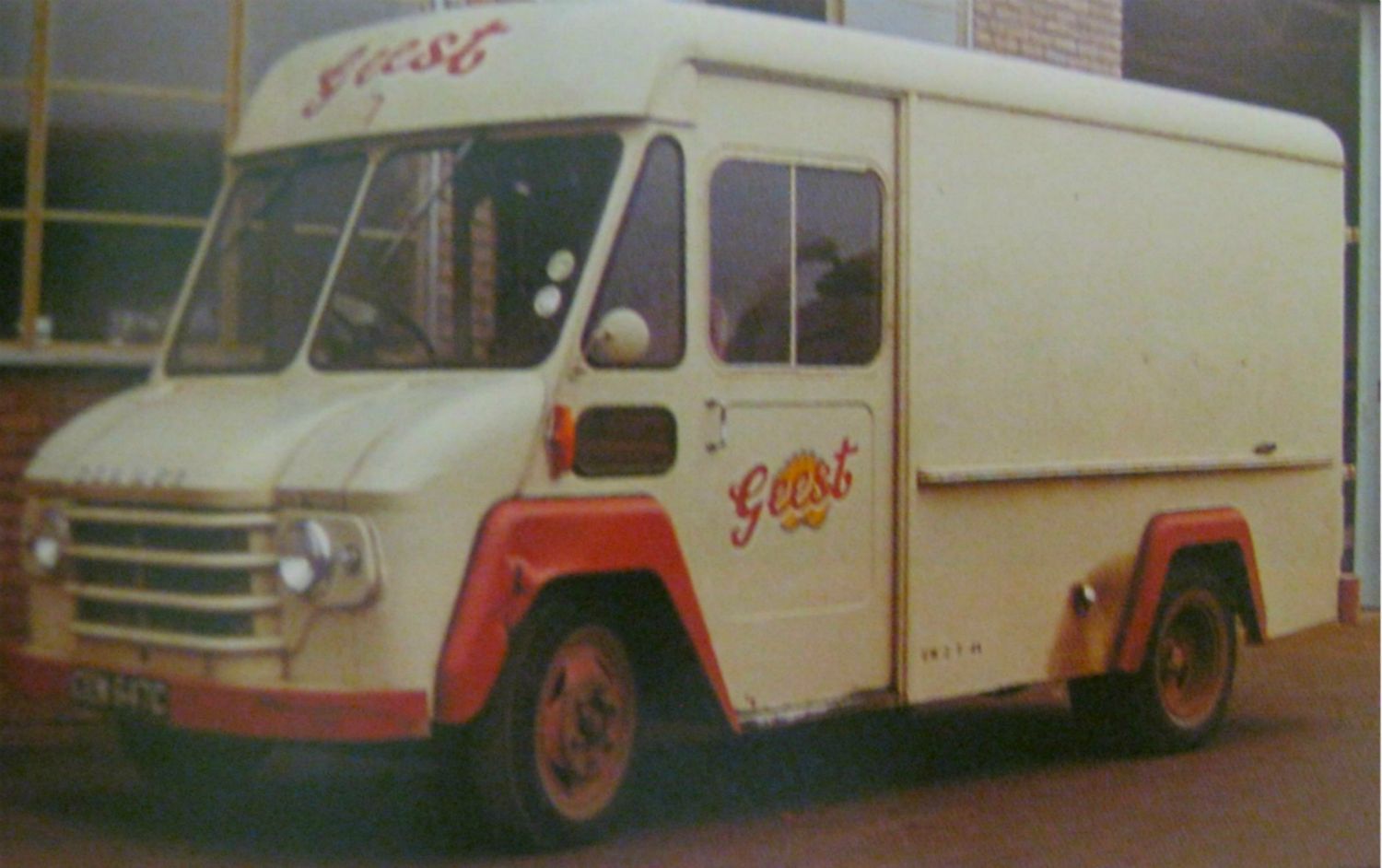
The impact of Geest—founded in Spalding in 1935 by Dutch brothers John and Leonard van Geest—was the single most powerful catalyst in transforming South Holland from a regional farming county into a global crossroads for the fresh produce and food logistics industry.
Industry experts describe the arrival of Geest in Spalding as being “like Marks & Spencer coming into a shopping centre”—it put the town on the international map and forced every other major food operator to follow them to the Fens.
The company completely altered the face of British agriculture and local employment in four major ways:
1. Inventing the “52-Week Supply” Import Hub
Historically, South Holland farming was highly seasonal. Geest fundamentally altered this by introducing heavy vertical integration.
- The Banana Boom: In 1953, John van Geest signed an exclusive deal to import bananas from the Windward Islands. The company launched its own shipping armada (The Geest Line).
- Global Sourcing: Geest used its extensive shipping infrastructure to import Dutch salad crops, Spanish citrus, and tropical fruits.
- Year-Round Logistics: This combination of local Fenland crops and global shipping turned Spalding into a 365-day-a-year distribution point. It created the exact framework for modern supermarket supply chains.
2. Pioneering the Prepared Foods Revolution
By the late 20th century, consumer tastes shifted away from buying loose, unwashed mud-covered vegetables. Geest anticipated this shift perfectly:
- In 1972, they opened a pioneering salad preparation factory in Spalding. This was the birth of the pre-washed, bagged supermarket salad.
- Through the 1980s and 1990s, they acquired massive food facilities to launch specialized divisions like Spalding Ready Meals, Spalding Soups & Sauces, and Spalding Dips & Dressings. They became the invisible manufacturer cooking the high-end ready meals sold under premium supermarket labels across the UK.
3. Concrete Local Economic Domination
The sheer scale of Geest completely transformed the workforce of South Holland:
- The Bakkavor Acquisition: In 2005, Icelandic food giant Bakkavor purchased Geest for £485 million. Bakkavor moved its central UK head office to the original West Marsh Road site in Spalding.
- The Employment Footprint: Because of the infrastructure Geest left behind, food manufacturing and logistics grew to employ 42% of the local workforce—an economic concentration nearly 13 times higher than the UK national average.
4. Anchoring the National Food Logistics Corridor
Geest’s fleet of iconic white delivery trucks created a massive transport ecosystem. To service Geest and its spin-offs, massive distribution networks moved into the area. Today, South Holland forms the backbone of the UK Food Valley, with specialized distribution giants like Fowler Welch, Freshlinc, and GIST handling an estimated 30% of all national food freight directly through the district.
Geest History
The origins of Geest trace back to a small, family-run Dutch horticultural business that expanded across the North Sea, ultimately turning a modest bulb-importing venture into an empire.
The foundation of the company developed through a few key operational milestones:
🌷 1. The Trans-North Sea Bulb Trade (1930)
The van Geest family had been involved in flower growing and horticulture in the Netherlands since the late 19th century. In 1930, brothers John (Jan) and Leonard van Geest left the family business in Holland to establish a flower bulb import branch in the United Kingdom. John initially stayed with a local farming family in Quadring, South Lincolnshire, to learn English and understand the geography of the Fenlands. He spent his early years trading flower bulbs directly between the Netherlands and Britain.
2. Official Incorporation in Spalding (1935)
Realising that South Holland’s deep silt soil was virtually identical to the prime bulb-growing land of the Netherlands, the brothers decided to stop relying solely on imports and start growing their own bulbs locally. On May 11, 1935, the first official company, Geest Horticultural Products, was incorporated inside Calthrop’s solicitors’ office in Spalding.
3. The “Geest Treatment” Advantage
A major turning point in Geest’s early success was their mechanical innovation. They set up specialized facilities in Spalding to chemically and thermally treat bulbs. This “Geest treatment” artificially altered the bulbs’ dormancy cycle, allowing them to bloom much earlier in the spring than those of other Dutch and British competitors. This gave Geest a significant time advantage and a monopoly on early-season flower markets.
4. Accidental Expansion into Manufacturing
To move their delicate flowers and bulbs without bruising them, the brothers began designing their own wooden trays, handbarrows, and specialized trolleys. They quickly realized these agricultural tools were superior to anything on the market. They began manufacturing Geest trucks and trolleys on West Marsh Road in Spalding, which became an highly profitable industrial manufacturing division that sold material-handling equipment to warehouses across the country.
By the time World War II arrived, Geest was firmly anchored in Spalding. Forced to pivot away from luxury flowers to food crops during the war, their established logistics network allowed them to pivot seamlessly into general fruit and vegetable imports in the 1940s, paving the way for their world-famous banana contracts in 1953.